
Medically reviewed by Assoc. Prof. Dr. Edward Choke Tieng Chek, Consultant Vascular Surgeon
Authority: Northern Heart Hospital Penang
Published: 15 January 2026 | Last updated: 11 August 2026

At a Glance
- Purpose: Opens a narrowed neck artery using a mesh tube (stent) to restore blood flow to the brain and prevent stroke.
- Procedure Type: Minimally invasive, usually performed under local sedation via the femoral (groin) artery.
- Duration & Stay: The procedure takes 1–2 hours; most patients are discharged within 24 hours.
- Key Recovery Factor: Strict adherence to antiplatelet medication and long-term lifestyle management.
Why Carotid Stenting Matters
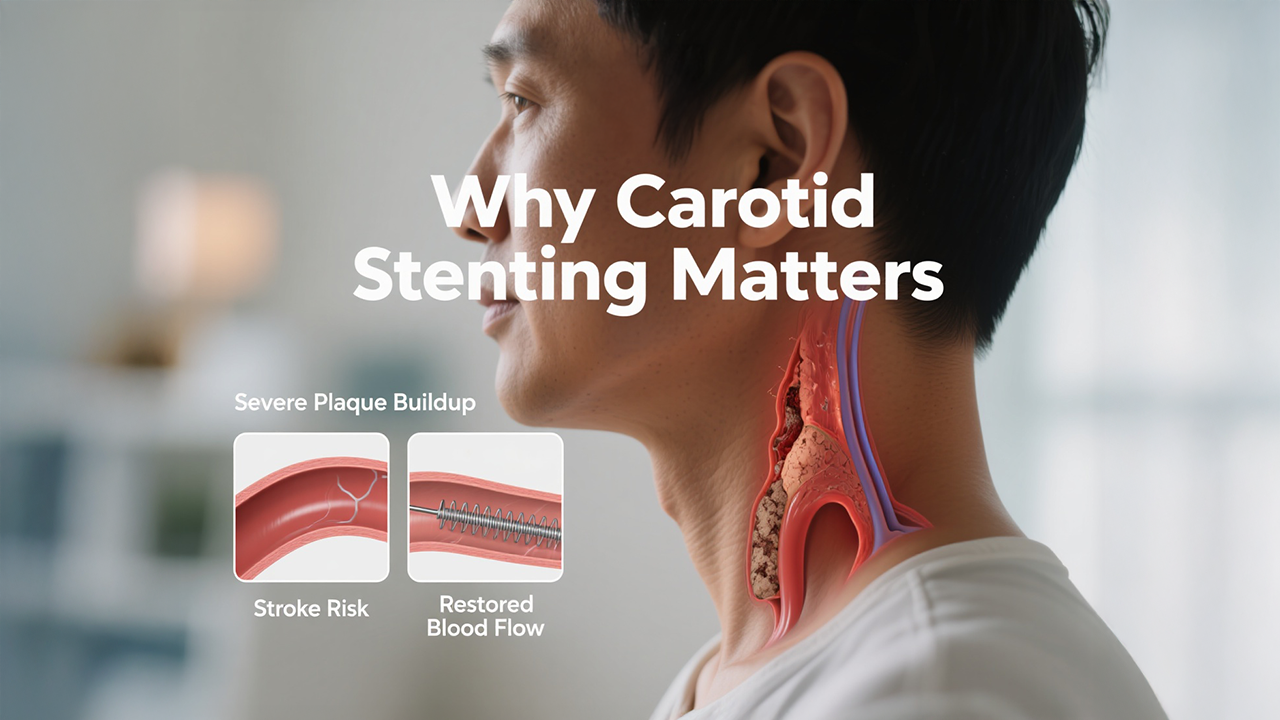
Getting a carotid stent is a major step towards preventing future strokes and protecting brain health. In plain language, the procedure opens up a narrowed neck artery so oxygen-rich blood can reach your brain consistently.
Carotid stenting is offered when the carotid arteries are narrowed enough to increase stroke risk. For example, if an imaging test shows a severe plaque buildup and you have symptoms like brief weakness or slurred speech, your care team may recommend stenting to lower the chance of a disabling stroke. If your doctor recommended a carotid stent, this guide walks you through the entire process, from initial testing to long-term recovery.
Understanding the Carotid Arteries & Narrowing
What are the Carotid Arteries?
The carotid arteries run along each side of your neck. They are the main highways delivering oxygen-rich blood from your heart to your brain. If these highways become narrowed, the brain can be starved of oxygen temporarily or permanently. Think of it like a water pipe that gradually gets clogged with sediment, reducing flow to the tap at the other end.
What Causes Carotid Artery Narrowing?
Most narrowing is caused by plaque buildup inside the artery wall. Plaque is a mixture of cholesterol, calcium, inflammatory cells and scar tissue that gradually accumulates.
- Atherosclerosis and Plaque Formation: Atherosclerosis develops over years. Initially the artery walls thicken, then soft fatty deposits form, and later the deposits harden. A plaque may stay stable for a long time or it may ulcerate and release debris that can travel to the brain and cause a blockage.
- Who Is at Risk? People with high blood pressure, high cholesterol, diabetes, a history of smoking, or a family history of vascular disease are at higher risk. Older adults are more susceptible because plaque accumulates with age. Recognising risk factors helps doctors decide who needs testing.
Signs and Symptoms That Lead to Evaluation
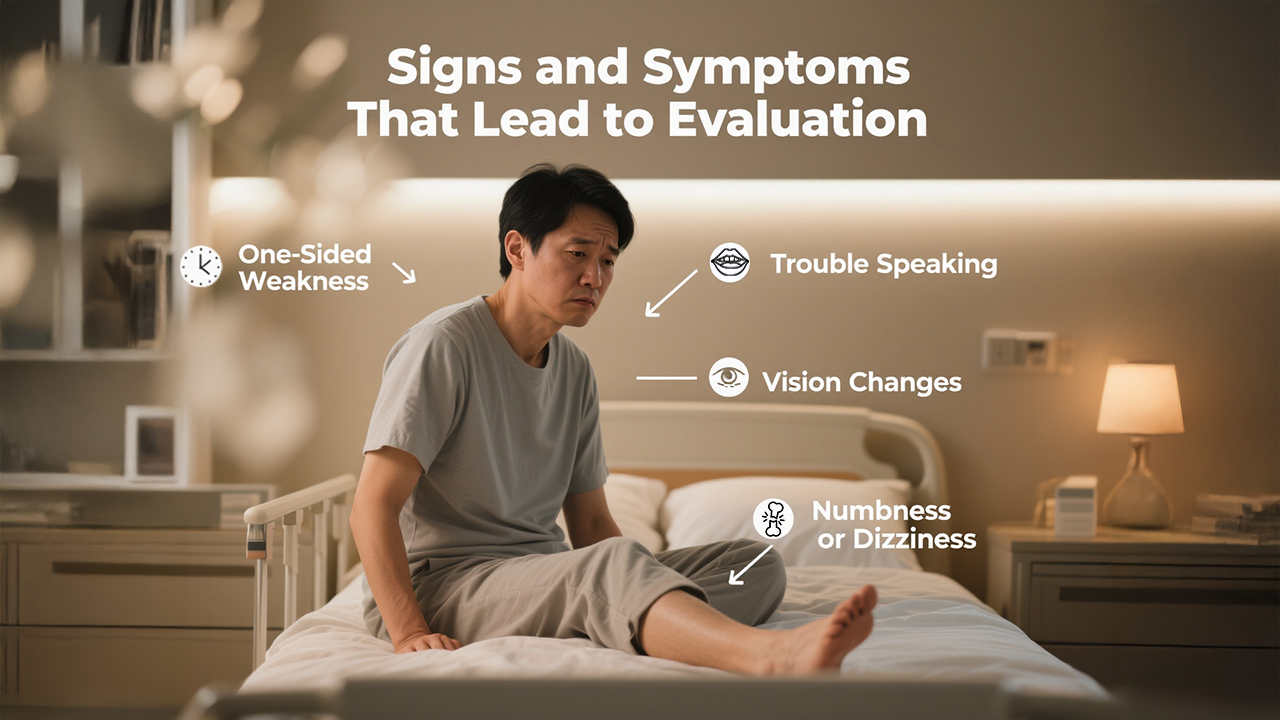
Symptoms that prompt evaluation include:
- Sudden weakness on one side of the body
- Sudden trouble speaking
- Sudden vision changes in one eye
- Brief spells of numbness or dizziness.
These may be transient ischemic attacks, which are warning signals that the underlying carotid artery may be unsafe.
How Doctors Confirm the Problem
Imaging tests are essential to measure the degree of narrowing and to plan a safe treatment.
- Carotid Ultrasound: Uses sound waves to show plaque and estimate how much the artery is narrowed. It is non invasive and often the first test ordered.
- CT Angiography and MR Angiography: Provide clearer, three dimensional pictures of the artery, including the length and shape of the blockage. These scans help doctors plan the best approach for treatment.
- Digital Subtraction Angiography: An invasive but gold standard test that shows tiny details of the artery. It is sometimes performed right before the stenting procedure so the interventional team can map the artery precisely.
When Is a Carotid Stent Recommended?
A stent may be recommended if the narrowing is severe, for example over 50 percent in symptomatic patients, and if open surgery carries high risk. Physicians weigh individual factors, such as age, heart and lung function, anatomic considerations, and previous neck operations, to decide whether stenting is the safer option.
Step-by-Step: The Clinical Care Pathway
Step 1: Pre-Procedure Evaluation and Decision Making
- Medical History and Risk Assessment: Your clinical team reviews your overall health, medications, allergies, and prior procedures. They also assess stroke risk and whether you had recent transient ischemic attacks.
- Medication Review and Optimisation: Some medications may need to be adjusted. For example, your doctor will usually start or continue antiplatelet therapy, which helps prevent clots during and after the stent placement. Your cardiologist or neurologist will tailor a medication plan specific to your needs.
Step 2: Preparing for the Procedure
- Fasting, Consent, and Practical Logistics: You will receive clear instructions on when to stop eating and drinking, typically several hours before the procedure. You will sign informed consent after the team explains risks and benefits. Arrange a ride home and a comfortable place to recover after discharge.
- Pre-procedure Medications and Imaging Review: The team reviews all imaging and blood tests, which may include kidney function, and coagulation status. If contrast dye is required, kidney function is checked to ensure safe use.
Step 3: The Procedure Day — Arrival and Anesthesia
- On procedure day, you arrive at the hospital, change into a gown, and meet the team.
- Local Sedation versus General Anesthesia: Carotid stents can be performed with moderate sedation and local numbing at the catheter entry site. You stay awake but relaxed. In some cases general anesthesia is used based on medical considerations. The team will explain what to expect.
Step 4: Catheter Navigation and Embolic Protection
- Access & Navigation: The interventionalist accesses the arterial system, most commonly through the femoral artery in the groin, and advances a guidewire and catheter to the carotid artery.
- Guidewire and Catheter Techniques: Using continuous X ray guidance, the team navigates the catheter up to the neck. This navigation is precise and gentle so as to avoid disturbing the plaque before protective measures are in place.
- Embolic Protection Devices: An embolic protection device is like a tiny filter placed downstream from the blockage. For example, if a small fragment of plaque dislodges during stent placement, the filter catches it, preventing it from traveling to the brain. This simple example helps explain why protection devices are standard in most procedures.
Step 5: Balloon Angioplasty and Stent Deployment
- Stent Deployment: Once protection is in place, the team performs balloon angioplasty and then deploys the stent.
- Types of Stents and how they work: A stent is a small mesh tube that expands to support the artery wall. Some stents expand by a balloon inside them, others are self expanding. The stent holds the artery open and restores a smoother flow of blood, reducing turbulent zones where clots tend to form.
Step 6: Immediate Post-Deployment Checks and Recovery
- After placement, imaging confirms stent position and blood flow improvement.
- Imaging confirmation and neurological monitoring: Immediate angiography and neurological checks ensure that the brain is receiving improved blood supply and that there are no immediate complications such as a new neurological deficit. The team monitors your blood pressure closely, because blood pressure swings can stress the stented area.
Step 7: In-Hospital Recovery and Observation
- You will be observed for several hours up to overnight depending on your condition.
- Doctors and nurses monitor the catheter insertion site, pulses in the wrist and ankle, and neurological status. Early mobilisation and walking are encouraged to reduce the risk of complications like blood clots.
Step 8: Discharge, Medications, and Early Follow-Up
- Discharge: Most stable patients go home the next day.
- Medications: You will continue antiplatelet medications for a prescribed period, often a combination of aspirin and another agent. The exact regimen depends on your physician.
- Follow-up: A follow up visit within a few weeks and an ultrasound to confirm the stent remains open.
Long-Term Follow-Up and Lifestyle Changes
Benefits and Expected Outcomes
Carotid stenting usually reduces the risk of future stroke by restoring smooth blood flow. Many patients report better cognitive clarity and reduced fatigue after recovery. The minimally invasive nature of the procedure allows shorter hospital stays and quicker return to daily life.
Possible Risks and How They Are Minimised
- Potential Risks: Bleeding at the catheter insertion site, allergic reaction to contrast dye, a small risk of peri-procedural stroke, and (rarely) infection.
- Risk Mitigation: Experienced interventional teams minimise these risks through precise patient selection, meticulous technique, and routine deployment of embolic protection devices.
Lifestyle & Follow-Up Checklist
Long-term success relies heavily on lifestyle choices and medication adherence:
- Antiplatelet Therapy: Take all blood-thinning medications exactly as prescribed.
- Vascular Risk Management: Control blood pressure and cholesterol through medication and diet.
- Smoking Cessation: Stop smoking immediately to protect blood vessel lining.
- Physical Activity: Engage in regular, physician-approved exercise.
- Routine Surveillance: Attend all scheduled follow-up visits and periodic ultrasound scans to detect potential issues early.
Choosing the Right Hospital and Team
Selecting a hospital with experienced surgeon and strong multidisciplinary support matters. Look for centers that perform carotid stenting frequently and have protocols for rapid diagnosis and complication management.
Why Patients Choose Northern Heart Hospital
Patients often choose Northern Heart Hospital Penang because it offers experienced operators, modern imaging suites, and coordinated care between neurology, cardiology, and vascular surgery. That multidisciplinary approach helps ensure the safest pathway from diagnosis to recovery.
Conclusion
The process of getting a carotid stent involves careful evaluation, precise procedure steps, and committed follow up. When performed by an experienced team, the procedure can meaningfully reduce stroke risk and help you return to normal life quickly. Know the steps, ask questions, and work with your care team to get the best possible outcome for your brain health.
Frequently Asked Questions
Typically, the procedure lasts one to two hours, but total time at the hospital may be longer due to preparation and recovery.
Most patients receive local anesthesia and sedation, so you are usually awake but comfortable. In some cases general anesthesia is used.
Many people resume light activities within a few days and return to normal work within one to two weeks, depending on individual recovery.
Yes, the stent remains in place permanently. Regular follow up and healthy lifestyle choices help maintain long term success.
Contact your team if you experience new weakness, slurred speech, sudden vision changes, severe headache, fever, increasing pain or swelling at the insertion site, or bleeding that will not stop.
If you are experiencing any of the symptoms mentioned above, please arrange an appointment with Dr. Edward Choke Tieng Chek for an evaluation and discussion on whether a carotid stent is the right treatment option for you.
About Northern Heart Hospital Penang
Founded in 2018, it is the first and only purpose-built cardiac and vascular specialist hospital in Penang and northern Malaysia, led by highly reputable and experienced clinicians, providing comprehensive heart and vascular care under one roof in the heart of George Town.
- Clinical Expertise: Tailored post-operative nutrition and rehabilitation plans.
- Comprehensive Care: Access to leading cardiac and vascular specialists under one roof.
Schedule an appointment with our specialists today if you have concerns regarding your cardiovascular health.
Disclaimer: This content is for educational and informational purposes only and does not substitute for professional medical advice, diagnosis, or treatment. Always consult a qualified healthcare provider regarding a medical condition.