
Medically reviewed by Dr. Mugilan Sundarajoo, Consultant Cardiologist
Authority: Northern Heart Hospital Penang
Published: 5 April 2026 | Last Updated: 18 May 2026
At a Glance
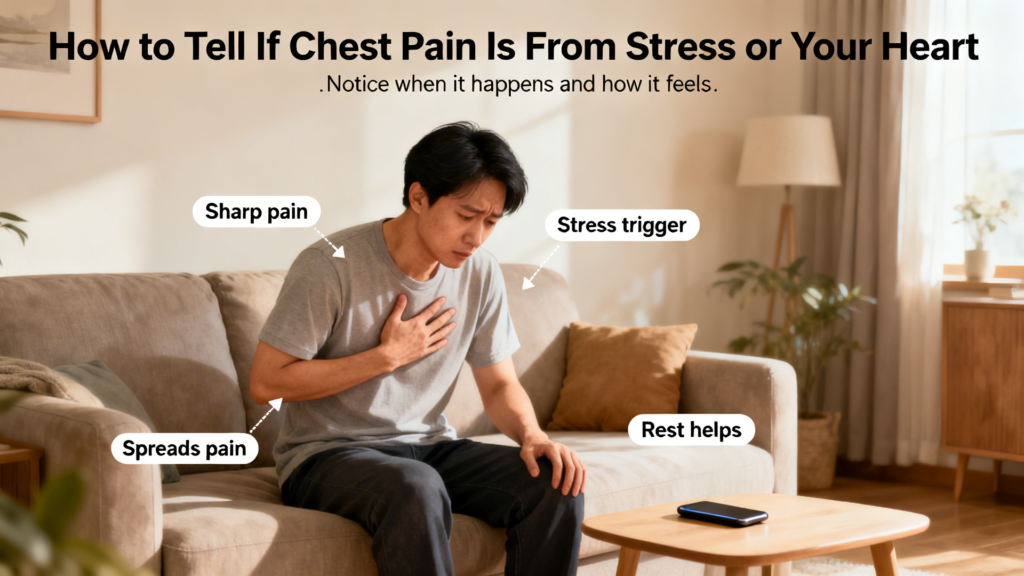
- The Core Twist: Stress and anxiety can mimic heart-related chest pain almost perfectly by triggering adrenaline spikes, shallow breathing, and muscle tension.
- The Main Difference: Stress-induced pain is typically sharp, localised, and brief. Heart-related pain usually presents as a heavy, squeezing sensation that radiates to your arm, jaw, or back.
- The Golden Rule: Never attempt to self-diagnose severe symptoms. If your chest pain is persistent, worsens with physical exertion, or is accompanied by sweating and nausea, it is a medical emergency.
Navigating the Complexity of Chest Pain
Have you ever felt a sudden tightness in your chest and wondered, “Is this stress or something more serious?” You’re not alone. Chest pain can be terrifying, especially because it is often associated with heart attacks. But here’s the twist, stress can mimic heart pain almost perfectly. In this guide, we’ll help you break down the signs, compare both causes, and know when to seek help.
Understanding the Nature of Chest Pain
Before you panic, you need to understand the type of pain you’re dealing with. Not all chest pain points to a heart problem. Many times, the culprit is psychological, muscular, or gastrointestinal. But how do you know?
What Does Stress-Related Chest Pain Feel Like?
Stress-induced chest pain usually feels like a sharp stab or an uncomfortable pressure. It might feel like something is sitting on your chest, especially during moments of panic or anxiety. This pain often comes and goes, sometimes lasting seconds to minutes. It may not radiate to other parts of your body, and it often improves when you relax or change positions.
How Heart-Related Chest Pain Typically Presents
In contrast, heart-related chest pain, especially from blocked arteries, often feels like pressure, heaviness, or squeezing. People describe it as “an elephant sitting on the chest.” It may radiate to your left arm, jaw, neck, or back. It’s usually persistent and can worsen with physical activity or emotional stress.
Causes of Stress-Induced Chest Pain
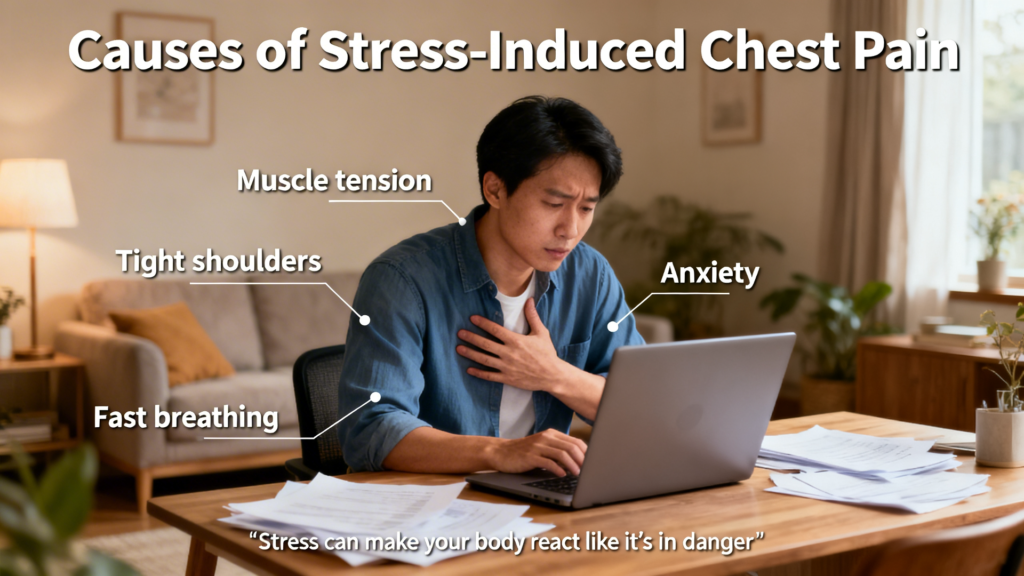
So, what’s really going on when your mind triggers chest pain? Your body reacts to psychological stress as if it were under physical threat.
Panic Attacks and Anxiety Disorders
Panic attacks can strike without warning. During one, your brain floods your body with stress hormones like adrenaline. Your heart rate spikes, breathing becomes shallow, and your muscles tighten, creating chest pain that mimics a heart attack. Many patients end up in emergency rooms only to find out their heart is fine.
Muscular Tension and Hyperventilation
Anxiety can cause you to breathe too quickly, reducing carbon dioxide in your blood. This leads to lightheadedness and muscle cramping, including the muscles in your chest. Additionally, stress causes your body to tense up, which can lead to costochondritis or chest wall pain.
Causes of Heart-Related Chest Pain
When the heart is to blame, the pain stems from inadequate blood supply to the heart muscle.
Angina
Angina is chest pain caused by restricted blood flow to the heart, often due to narrowed arteries. It’s a warning sign that your heart is not getting enough oxygen. Angina can be triggered by exertion or stress and typically goes away with rest or medication.
Myocardial Infarction (Heart Attack)
This is a medical emergency. Unlike angina, the pain does not go away with rest. It’s more intense, lasts longer, and is usually accompanied by other symptoms like sweating, nausea, and shortness of breath. If you suspect a heart attack, get emergency help immediately.
Comparing Stress Chest Pain vs Heart Chest Pain
Knowing the differences can save your life. Let’s look at some practical comparisons.
| Clinical Indicator | Stress-Induced Chest Pain | Heart-Related Chest Pain |
|---|---|---|
| Onset & Duration | Sudden, often during periods of acute anxiety or panic. Lasts seconds to minutes. | Gradual or explicitly triggered by physical activity; more persistent. |
| Location & Sensation | Often sharp, localised, and varies in position. May improve with movement. | Diffuse, heavy squeezing (“elephant on chest”). Radiates to left arm, jaw, neck, or back. |
| Accompanying Symptoms | Rapid shallow breathing, palpitations, dizziness, muscle tightness. | Profuse sweating, nausea, sudden shortness of breath, profound fatigue. |
When Should You Worry? Red Flags to Never Ignore
Critical Clinical Warning
If your chest pain comes with shortness of breath, radiating pain, fainting, or does not improve with rest, call emergency services immediately. You should never ignore new or unusual symptoms. A quick visit to a cardiologist at Northern Heart Hospital Penang can make all the difference.
How Doctors at Northern Heart Hospital Penang Diagnose the Cause
Pinpointing the exact cause of chest pain often requires a combination of diagnostic tests.
- ECG and Blood Tests
An electrocardiogram (ECG) records your heart’s electrical activity and detects abnormalities. Blood tests, like troponin levels, can reveal heart muscle damage. - Stress Tests and Imaging
Stress tests help determine how your heart responds to exertion. Imaging, such as echocardiograms or CT scans, offers a detailed view of the heart’s structure and function. Visit Northern Heart Hospital Penang to schedule these critical evaluations with expert cardiologists.
Tips to Relieve Stress Chest Pain at Home
If your doctor confirms stress is the cause, there are plenty of ways to ease the symptoms.
Breathing and Relaxation Techniques
Practice deep belly breathing:
- Inhale slowly for 4 seconds.
- Hold your breath for 4 seconds.
- Exhale steadily for 6 seconds.
Progressive muscle relaxation and mindfulness meditation can also help calm your nervous system.
Lifestyle Adjustments That Work
- Exercise regularly (but get your doctor’s clearance first).
- Cut down on caffeine and alcohol.
- Sleep 7 to 9 hours a night.
- Speak with a therapist or counselor if anxiety becomes chronic.
For more wellness tips, browse the educational resources at Northern Heart Hospital Penang.
What to Do in a Cardiac Emergency
- Call Emergency Services
Immediate Action
Do not attempt to self-diagnose or drive yourself to the hospital. Call emergency services immediately. - Chew an Aspirin
If Advised
Chew an aspirin only if explicitly advised by emergency operators or a medical professional. - Rest and Wait
Minimise Exertion
Sit quietly, stay calm, and wait for emergency medical help to arrive. Time is muscle, every second counts.
Meet the Experts at Northern Heart Hospital Penang
Northern Heart Hospital Penang houses a team of top-tier cardiologists and heart specialists who handle everything from diagnostics to advanced treatment. Whether your chest pain is stress-related or cardiac in nature, their multidisciplinary approach ensures precise care. Visit nhearthospital.com to learn more or book a consultation.
Conclusion: Listen to What Your Chest Is Telling You
Chest pain is never something to shrug off. Whether it’s brought on by stress or signals a more serious cardiac condition, your body is waving a red flag. Learning to decode the source is the first step toward protecting your heart. If you’re ever in doubt, seek professional advice promptly. Better safe than sorry, right?
Frequently Asked Questions
Yes, stress can trigger symptoms very similar to a heart attack, including tightness, palpitations, and shortness of breath.
Anxiety pain is often sharp and brief, while heart pain feels heavy and radiates. Always consult a doctor to be sure.
Common tests include ECG, blood tests, stress tests, and imaging studies like echocardiograms or CT scans.
Yes. If the symptoms are new, severe, or prolonged, it’s safest to get medical attention immediately.
Yes, with relaxation techniques, breathing exercises, and stress management. However, rule out heart causes first.
About Northern Heart Hospital Penang
Founded in 2018, it is the first and only purpose-built cardiac and vascular specialist hospital in Penang and northern Malaysia, led by highly reputable and experienced clinicians, providing comprehensive heart and vascular care under one roof in the heart of George Town.
Schedule an appointment with our specialists if you have concerns regarding your cardiovascular health.
Disclaimer: This content is for educational and informational purposes only and does not substitute for professional medical advice, diagnosis, or treatment. Always consult a qualified healthcare provider regarding a medical condition.
