
How Skipping Vegetables Affects Your Blood Vessels
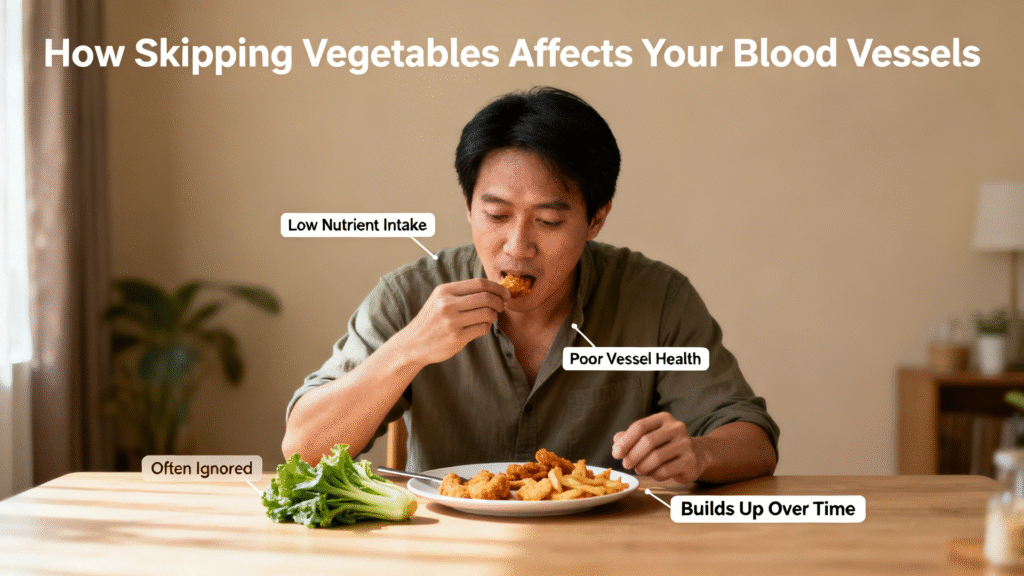
Vegetables are often treated like optional side dishes instead of daily essentials. Many people push them aside, thinking they can make up for it later or that supplements will do the job. The truth is that skipping vegetables quietly damages your blood vessels over time. The effects are subtle at first, but they add up in ways that can seriously impact heart and vascular health.
Why Vegetables Play a Critical Role in Vascular Health
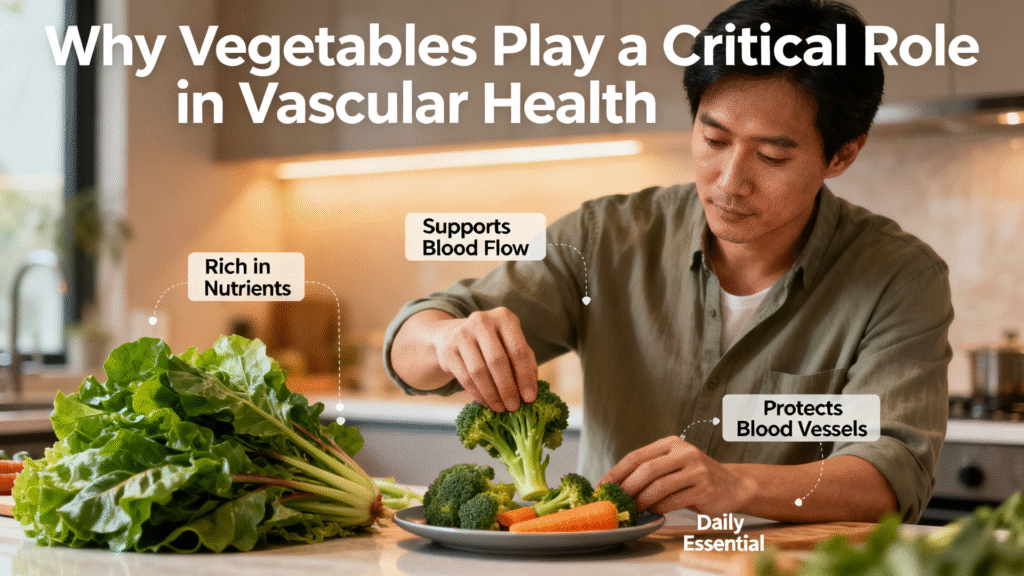
Vegetables are packed with compounds that blood vessels rely on to stay flexible, strong, and responsive. They deliver fiber, vitamins, minerals, and phytochemicals that protect vessel walls from damage.
Without vegetables, blood vessels lose essential support systems. Over time, this leads to stiffness, inflammation, and narrowing that increases the risk of heart attack, stroke, and circulation problems.
Understanding How Blood Vessels Stay Healthy
Healthy blood vessels expand and contract smoothly, allowing blood to flow freely. The inner lining of the vessels, known as the endothelium, plays a major role in controlling blood pressure and clot prevention.
Vegetables help nourish this lining. When vegetable intake is low, the endothelium becomes stressed and less responsive, setting the stage for long term vascular disease.
The Link Between Vegetable Intake and Artery Flexibility and contributes to plaque formation

Artery flexibility allows blood to move efficiently with each heartbeat. Vegetables contain nitrates and antioxidants that support this natural elasticity.
When vegetables are skipped, arteries stiffen faster. This raises blood pressure and forces the heart to work harder, increasing cardiovascular strain over time.
How Skipping Vegetables Increases Inflammation
Chronic low grade inflammation is one of the biggest enemies of vascular health. Vegetables help calm this inflammation through phytonutrients and antioxidants.
Without them, inflammatory markers rise quietly. This constant irritation weakens vessel walls and makes plaque buildup more likely.
The Role of Fiber in Blood Vessel Protection
Fiber helps regulate cholesterol, blood sugar, and gut health, all of which affect blood vessels.
Low fiber intake leads to unstable blood sugar and higher LDL cholesterol, both of which directly damage arteries and reduce circulation quality.
Micronutrients in Vegetables That Support Circulation
Vegetables provide specific nutrients that blood vessels cannot function without.
Potassium and Blood Pressure Control
Potassium helps balance sodium levels in the body. Adequate potassium intake relaxes blood vessel walls and lowers blood pressure naturally.
Antioxidants and Vessel Repair
Antioxidants protect blood vessels from oxidative damage. They help repair daily wear and tear caused by stress, pollution, and poor diet.
How Many Vegetables Do Blood Vessels Actually Need
Most people need at least 13 servings of vegetables daily to support vascular health. Variety matters just as much as quantity.
Different colors provide different protective compounds, which together strengthen blood vessels from multiple angles.
Simple Ways to Add More Vegetables Without Feeling Forced
Vegetables do not need to dominate every plate. Adding them to soups, stir fries, omelets, and smoothies makes intake easier.
Consistency matters more than perfection. Even small daily improvements help blood vessels recover and function better.
When to Consider Vascular Health Screening
I think overall health screening to provide insights about the body condition of the person. As vascular health is accumulation of many years.
If vegetable intake has been low for years, screening can provide valuable insight into blood vessel health.
Non invasive tests can detect early narrowing or stiffness before symptoms appear. Hospitals such as Northern Heart Hospital offer vascular screening services designed for early detection and prevention.
Conclusion
Skipping vegetables may seem harmless in the short term, but the damage to blood vessels builds quietly over time. Vegetables support flexibility, reduce inflammation, balance cholesterol, and protect vessel walls from daily stress. Choosing to include them regularly is one of the simplest and most powerful ways to protect vascular health and prevent future complications.
FAQs
1. Can skipping vegetables really damage blood vessels
Yes, long term vegetable deficiency increases inflammation, stiffness, and plaque formation in blood vessels.
2. Are supplements a good replacement for vegetables
Supplements cannot fully replace the fiber and complex compounds found in whole vegetables.
3. How long does it take for vegetables to improve vascular health
Benefits begin within weeks, with continued improvement over months and years.
4. Do cooked vegetables still help blood vessels
Yes, both cooked and raw vegetables provide important nutrients for vascular health.
5. Should I get screened if my diet has been poor
Screening can help detect early vascular changes and guide prevention strategies.