
Medically reviewed by Assoc. Prof. Dr. Edward Choke Tieng Chek, Consultant Vascular Surgeon
Authority: Northern Heart Hospital Penang
Published: 13 January 2026 | Last updated: 12 August 2026
At a Glance
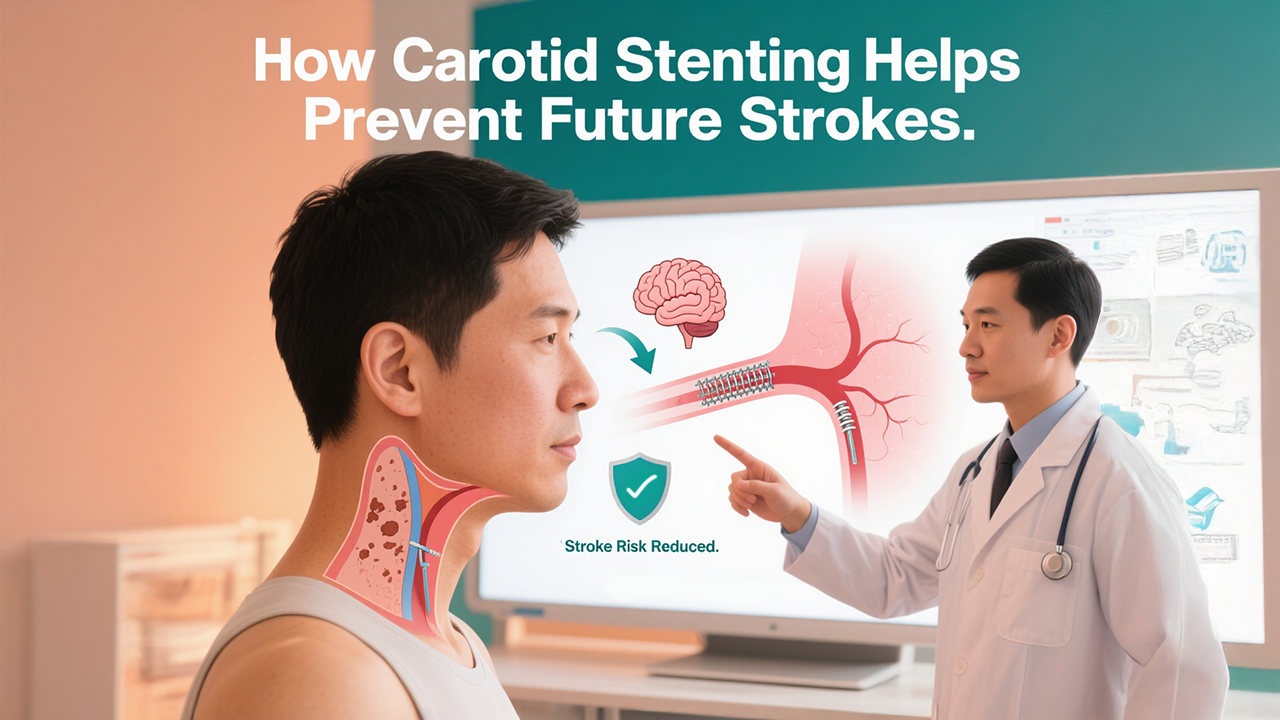
- What it is: A minimally invasive procedure using a mesh tube (stent) to open narrowed carotid arteries and restore blood flow to the brain.
- Primary Benefit: Significantly reduces the risk of ischemic stroke and Transient Ischaemic Attacks (TIAs).
- Who it is for: High-risk patients, elderly individuals, or those with severe carotid stenosis unsuitable for open surgery.
- Recovery Time: Typically involves a short hospital stay (often overnight) with rapid return to light activities.
Carotid stenting is an advanced, minimally invasive procedure designed to reduce the risk of stroke by restoring blood flow in narrowed carotid arteries. These arteries, located on either side of your neck, supply your brain with oxygen-rich blood. When they become blocked by plaque buildup, the risk of stroke increases dramatically. This article explores how carotid stenting works, who is a candidate, and what to expect during and after the procedure.
The Critical Role of Carotid Arteries
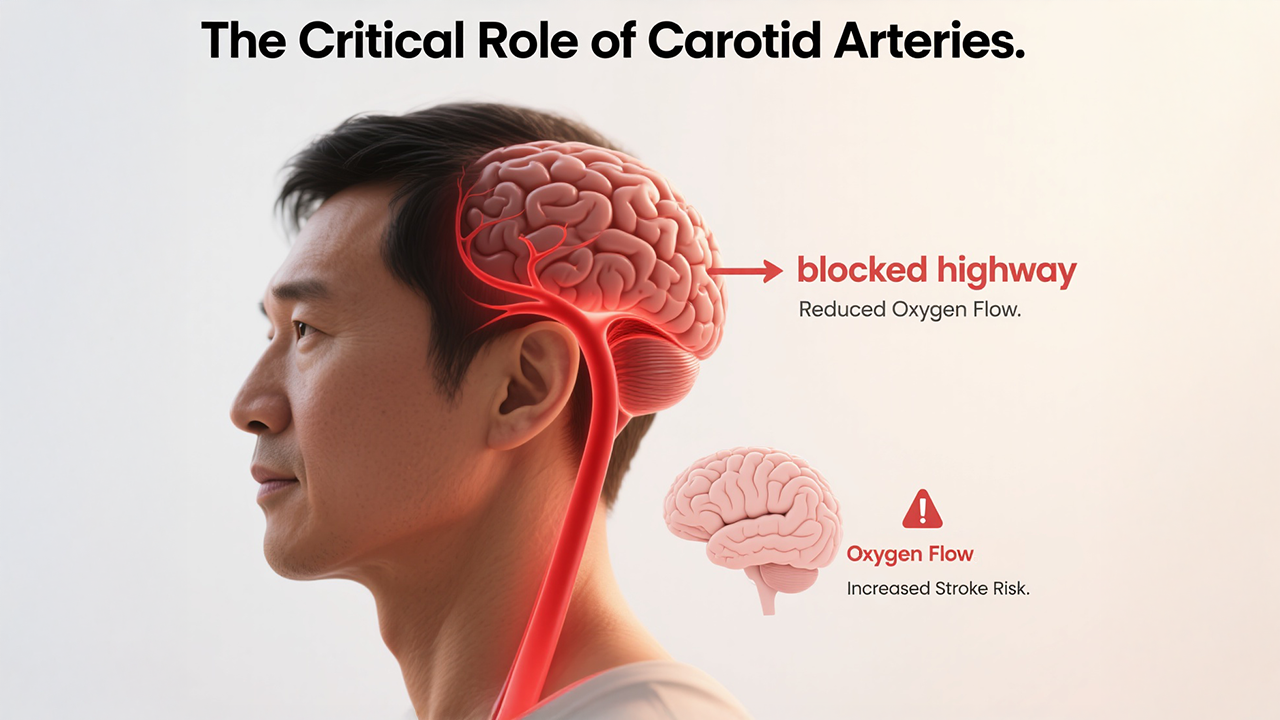
Carotid arteries are like major highways that deliver blood to your brain. When these highways get blocked, even partially, the flow of life-sustaining oxygen is reduced. Reduced blood flow in your carotid arteries increases the risk of a stroke, which can have devastating consequences if not addressed promptly.
Understanding Stroke Risk and Carotid Disease
Stroke is one of the leading causes of death and disability worldwide. Narrowing of the carotid arteries, or carotid stenosis, accounts for a significant portion of ischemic strokes. Understanding this connection is crucial.
What Happens When Carotid Arteries Narrow
When plaque accumulates in the artery walls, it can reduce the diameter of the artery, limiting blood flow. A sudden plaque rupture may release debris, forming a clot that can travel to the brain, triggering a stroke. Even moderate narrowing increases stroke risk over time, which is why proactive management is essential.
Warning Signs & Red Flag Symptoms
| Symptom Category | Associated Warning Signs | Urgent Action Required |
|---|---|---|
| Motor Functions | Sudden weakness or numbness on one side of the body | Seek emergency medical evaluation immediately. These are potential signals of a Transient Ischaemic Attack (TIA). |
| Speech & Communication | Slurred speech or difficulty articulating words | |
| Vision Disturbances | Sudden loss or reduction of vision in one eye |
Who Is a Candidate for Carotid Stenting
Not every patient with carotid narrowing requires a stent. Physicians carefully assess who will benefit the most from the procedure.
High-Risk Patients and Age Considerations
Carotid stenting is typically considered for patients who are symptomatic or have severe narrowing, especially those with high surgical risk due to age, heart conditions, or prior neck surgeries. For example, an 80-year-old patient with narrowed carotid arteries and heart disease might be safer with stenting than open surgery.
Alternatives to Stenting
Alternatives include lifestyle modification, medication management with antiplatelet drugs, or surgical procedures like carotid endarterectomy. Your doctor will weigh the benefits and risks of each approach before making a recommendation.
How Carotid Stenting Works
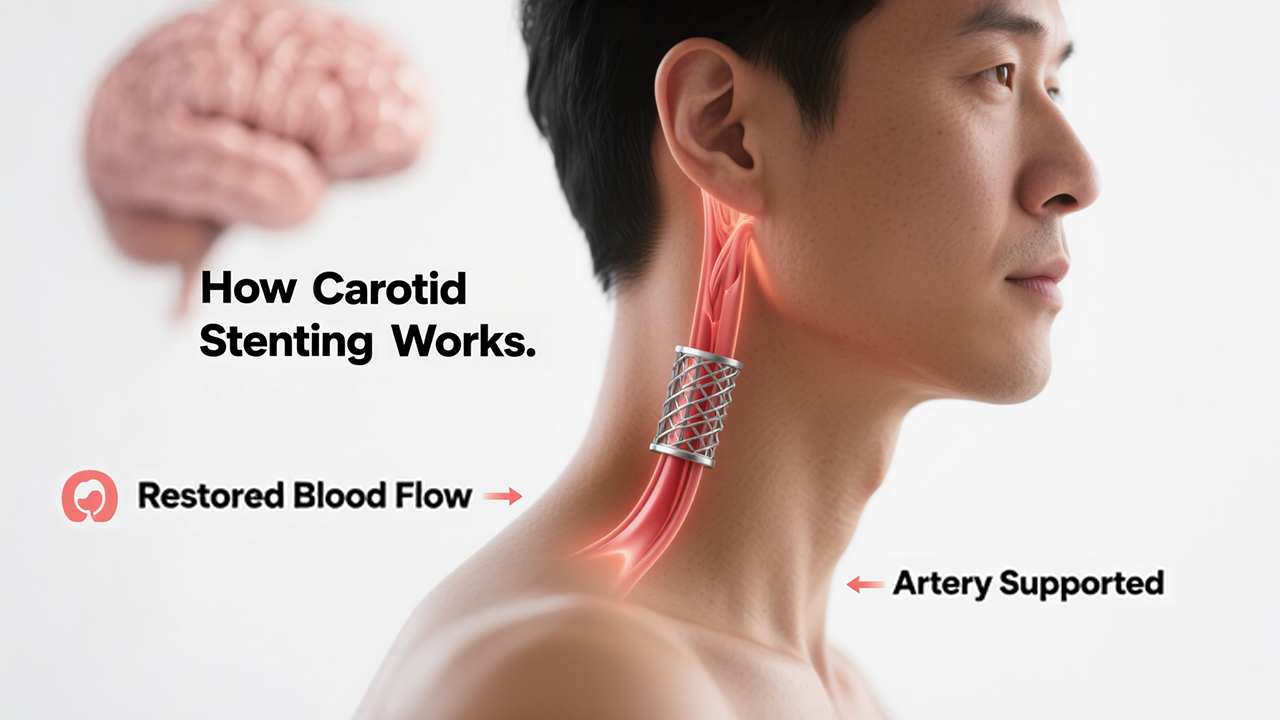
The stent acts as a supportive scaffold that holds the artery open, preventing collapse and allowing blood to flow freely to the brain.
The Role of Stents in Restoring Blood Flow
A stent is a small, expandable mesh tube that fits inside the narrowed artery. Once deployed, it expands against the arterial walls, compressing plaque and creating a smooth pathway for blood flow. Think of it like inserting a support ring in a collapsed tunnel to allow cars to pass safely.
Balloon Angioplasty and Embolic Protection Devices
Before placing the stent, a small balloon may be used to gently expand the artery. To prevent plaque debris from traveling to the brain, doctors often use embolic protection devices, which act like filters to capture any dislodged particles.
Step-by-Step Process of Carotid Stenting
- Pre-Procedure Evaluation (Comprehensive Diagnostic Mapping)
– Review of full medical history and current pharmacological regimen.
– Diagnostic imaging to map arterial structure and plaque density.
– Blood tests assessing renal function, blood pressure, and contrast dye sensitivity. - Preparing for the Procedure (Pre-Surgical Safeguards)
– Adherence to fasting protocols for a designated period prior to the procedure.
– Initiation or adjustment of antiplatelet medications to prevent clot formation.
– Formal consent and final pre-procedural team briefing. - Procedure Day: Catheter Navigation and Stent Placement (Intra-Procedural steps)
– Access gained via catheter, typically through the femoral artery in the groin.
– Micro-catheter guided precisely to the target carotid artery under advanced imaging.
– Deployment of the embolic protection filter followed by precise stent positioning and expansion.
– Continuous real-time monitoring of vital signs and neurological status. - Immediate Post-Procedure Monitoring (Clinical Observation)
– Post-deployment imaging to confirm optimal stent positioning and vessel permeability.
– Rigorous neurological evaluations to verify appropriate cerebral blood flow. - Hospital Recovery and Discharge (Post-Operative Care)
– Short observation stay, typically involving one night in hospital care.
– Direct monitoring of the catheter access site alongside guided early mobilisation.
– Provision of tailored discharge instructions covering medications, temporary activity limits, and follow-up schedules.
Benefits and Risk Management
Benefits of Carotid Stenting
- Reduced Stroke Risk: By opening blocked arteries, stenting significantly decreases the likelihood of future strokes, especially in patients who have already experienced TIAs or minor strokes.
- Improved Blood Flow and Brain Health: Restoring normal blood flow helps maintain cognitive function, reduce fatigue, and support overall brain health. Patients often report feeling more alert and less mentally foggy after recovery.
Risks and How They Are Managed
Every medical procedure carries some risk, but careful planning minimises complications.
- Potential Complications: Possible risks include bleeding at the catheter site, allergic reactions to contrast dye, minor or major strokes during the procedure, and infection. Rare complications may involve artery dissection or restenosis, which is the re-narrowing of the artery.
- Safety Measures in Modern Practice: Experienced teams employ embolic protection devices, advanced imaging, and meticulous catheter techniques to reduce risks. Continuous monitoring during and after the procedure ensures that any issues are addressed promptly.
Long-Term Care and Lifestyle Changes
A carotid stent is just one part of long-term stroke prevention.
Follow-Up Care & Surveillance
- Routine Vascular Imaging: Scheduled carotid duplex ultrasound scans ensure the stent remains fully patent and functioning optimally.
- Medication Reviews: Periodic reviews to adjust antiplatelet dosages and manage cardiovascular risk factors.
Essential Lifestyle Habits
To preserve arterial health and support the long-term success of the stent, patients should focus on:
- Rigorous control of blood pressure and cholesterol levels.
- Complete cessation of smoking.
- Adoption of a heart-healthy, balanced diet.
- Regular, physician-approved physical activity.
Choosing the Right Hospital and Specialists
Selecting a skilled team is crucial for safety and successful outcomes.
Why Patients Prefer Northern Heart Hospital Penang
Northern Heart Hospital is a preferred choice due to experienced specialists, advanced imaging technology, and a multidisciplinary approach to vascular care. Coordinated teams of interventional cardiologists, neurologists, and vascular surgeons provide comprehensive care from diagnosis through recovery.
Conclusion
Carotid stenting is a proven, minimally invasive way to reduce stroke risk and improve blood flow to the brain. By understanding the process, preparing adequately, and following long-term care recommendations, patients can enjoy a safer, healthier future. Partnering with a skilled hospital and medical team, like those at Northern Heart Hospital, ensures the highest quality care and peace of mind.
Frequently Asked Questions
Patients usually feel minimal discomfort thanks to local anesthesia and sedation. Most describe a slight pressure during catheter insertion.
Most patients return to normal activities within one to two weeks, with full recovery depending on individual health.
Rarely, arteries can re-narrow. Routine follow-up imaging helps detect any issues early, allowing prompt treatment.
Patients are advised to avoid heavy lifting for a few days and follow medication and lifestyle instructions closely.
Prompt evaluation is critical. Early intervention within weeks of a TIA can significantly reduce stroke risk.
If you are experiencing any of the symptoms listed above, we encourage you to schedule an appointment with Dr. Edward Choke Tieng Chek for a professional evaluation and timely care.
Northern Heart Hospital Penang
Founded in 2018, it is the first and only purpose-built cardiac and vascular specialist hospital in Penang and northern Malaysia, led by highly reputable and experienced clinicians, providing comprehensive heart and vascular care under one roof in the heart of George Town.
- Clinical Expertise: Tailored post-operative nutrition and rehabilitation plans.
- Comprehensive Care: Access to leading cardiac and vascular specialists under one roof.
Schedule an appointment with our specialists today if you have concerns regarding your cardiovascular health.
Disclaimer: This content is for educational and informational purposes only and does not substitute for professional medical advice, diagnosis, or treatment. Always consult a qualified healthcare provider regarding a medical condition.