

The human heart beats in a steady, coordinated rhythm that keeps blood circulating efficiently throughout the body. This rhythm is controlled by a complex electrical system that signals the heart when to contract and relax. When this system is disrupted, the result is a heart rhythm disorder known as arrhythmia.
At Northern Heart Hospital Penang, arrhythmia care is a key focus, supported by advanced diagnostics, specialised expertise and a dedicated Atrial Fibrillation (AF) & Arrhythmia Clinic. Understanding arrhythmia is the first step towards recognising symptoms early and seeking timely, effective care.
What is a heart arrhythmia?
A heart arrhythmia refers to any irregularity in the heartbeat. This could mean the heart beats too fast, too slow, or in an uncoordinated way.
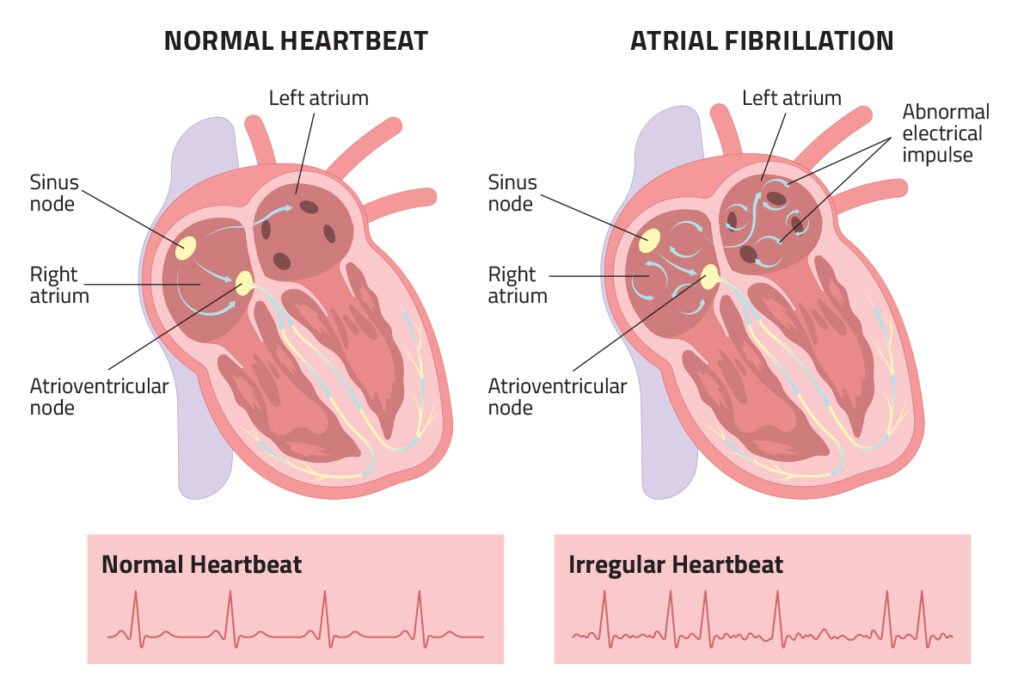
In a normal heart rhythm, known as sinus rhythm, electrical signals originate from the sinus node and travel through the heart in an organised manner. This ensures that the upper and lower chambers contract in sequence, maintaining efficient blood flow.
In arrhythmia, these signals become disrupted. The result can be:
- Tachycardia: a heart rate that is too fast
- Bradycardia: a heart rate that is too slow
- Irregular rhythms: such as atrial fibrillation
Visual comparisons of these rhythms often show how a normal, evenly spaced heartbeat differs from the chaotic or delayed patterns seen in arrhythmias.
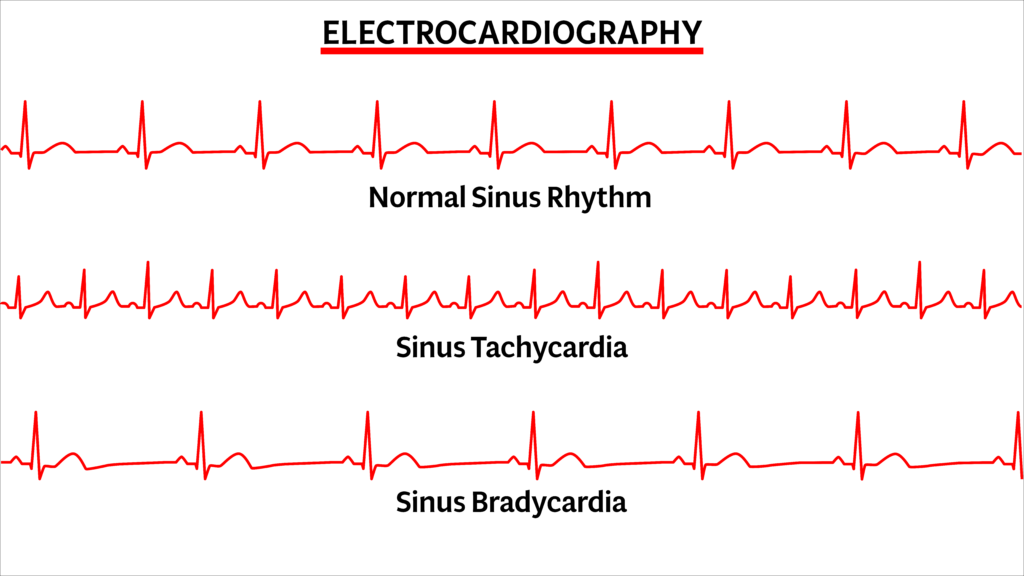
Types of heart rhythms
To better understand arrhythmia, it helps to compare the main rhythm types:
- Normal sinus rhythm
A steady, regular heartbeat, typically between 60 and 100 beats per minute.
- Tachycardia
A fast heart rate, usually above 100 beats per minute, which may feel like palpitations or pounding. - Bradycardia
A slow heart rate, usually below 60 beats per minute, which can cause fatigue or dizziness. - Atrial fibrillation (AF)
The most common type of arrhythmia, characterised by rapid, irregular electrical signals in the upper chambers of the heart.
Atrial fibrillation: The most common arrhythmia
| INFO BOX: WHY HEART RHYTHM MATTERS?A normal rhythm ensures efficient blood flow. When the rhythm becomes irregular, the heart may not pump effectively, which can lead to complications such as stroke, heart failure or reduced quality of life. |
Among all arrhythmias, atrial fibrillation, often referred to as AF, is the most frequently diagnosed. It occurs when the atria, or upper chambers of the heart, experience chaotic electrical activity. Instead of contracting properly, they quiver.
This disruption can lead to:
- Blood pooling in the heart
- Formation of clots
- Increased risk of stroke
- Reduced cardiac efficiency
AF may occur occasionally, persist over time, or become permanent if untreated.
At Northern Heart Hospital Penang, the AF & Arrhythmia Clinic is specifically designed to diagnose and manage AF using advanced, evidence-based approaches.
Symptoms of heart arrhythmia
Symptoms of arrhythmia can vary widely. Some individuals may experience obvious signs, while others may not notice anything until complications arise.
Common symptoms include:
- Palpitations or a fluttering sensation in the chest
- Rapid or slow heartbeat
- Dizziness or light-headedness
- Shortness of breath
- Chest discomfort
- Fatigue or reduced exercise tolerance
- Fainting or near fainting episodes
It is important to note that some arrhythmias, especially atrial fibrillation, may be silent. Regular screening becomes essential, particularly for individuals with risk factors.
Causes and risk factors
Arrhythmias can result from a variety of underlying conditions or triggers. These include:
- Heart-related causes
- Coronary artery disease
- Heart valve disorders
- Heart failure
- Previous heart attack
- Congenital heart conditions
- Non-cardiac causes
- High blood pressure
- Diabetes
- Thyroid disorders
- Electrolyte imbalances
- Chronic lung disease
- Lifestyle and external factors
- Excessive caffeine or alcohol
- Smoking
- Stress and anxiety
- Certain medications
Age is also a significant risk factor, particularly for atrial fibrillation.
How arrhythmias are diagnosed
Accurate diagnosis is essential for effective treatment. At Northern Heart Hospital Penang, a comprehensive range of investigation services is available, including:
- Electrocardiogram (ECG) to record heart rhythm
- Exercise stress testing to identify abnormal heart rhythms
- Holter monitoring for continuous rhythm tracking
- Electrophysiology studies (EPS) to assess electrical pathways
- Event/implantable loop recorders for long-term monitoring of heart electrical activity
- Cardiac imaging such as echocardiography, CT and MRI
These tools allow specialists to identify the exact type and cause of arrhythmia, enabling personalised treatment plans.
Treatment options for arrhythmia
Treatment depends on the type, severity and underlying cause of the arrhythmia. At Northern Heart Hospital Penang, a full spectrum of treatment options is offered.
1. Lifestyle and medical management
For mild cases, lifestyle changes and medication may be sufficient. These include:
- Anti-arrhythmic medications
- Anticoagulants to reduce stroke risk in AF
- Blood pressure and diabetes control
| INFO BOX: WHEN TO SEEK MEDICAL ATTENTION?Seek prompt evaluation if you experience persistent palpitations, unexplained dizziness, fainting, or chest discomfort. Early detection significantly reduces the risk of complications such as stroke. |
2. Minimally-invasive procedures
Modern cardiology has made significant advances in minimally invasive treatments, many of which are available at Northern Heart Hospital Penang.
Catheter ablation is a procedure that targets and destroys abnormal electrical pathways using energy sources such as radiofrequency or pulsed-field ablation. This can restore normal rhythm and, in some cases, provide a long-term solution.
3. Device therapy
For patients with more complex arrhythmias, implantable devices may be recommended:
- Pacemakers to regulate slow heart rhythms
- Implantable cardioverter defibrillators (ICD) to prevent sudden cardiac death
- Cardiac resynchronisation therapy (CRT) for patients with heart failure
4. Stroke prevention strategies
In patients with atrial fibrillation, reducing stroke risk is a priority. One advanced option is left atrial appendage closure, a procedure that prevents clot formation in a key area of the heart
The Atrial Fibrillation (AF) & Arrhythmia Clinic at Northern Heart Hospital Penang[NK1]
The Atrial Fibrillation (AF) & Arrhythmia Clinic at Northern Heart Hospital Penang is a specialised unit dedicated to diagnosing and treating heart rhythm disorders (arrhythmias). Equipped with the latest technology, the centre offers minimally invasive procedures, advanced device therapies, and lifelong follow-up care to improve patient safety, reduce stroke and heart failure risk, and enhance quality of life. In particular, this clinic also has a specialised focus on the treatment of atrial fibrillation (AF), which is the most common type of arrhythmia that we see in patients.
The clinic combines advanced technology with a multidisciplinary approach to provide comprehensive care. Services include:
- Advanced electrophysiology studies
- Catheter ablation including pulsed-field ablation
- Pacemaker and ICD implantation
- Long-term device monitoring and programming
- Medication management and anticoagulation therapy
- Cardiac imaging support
- Lifelong follow-up care
The clinic places strong emphasis on early diagnosis, personalised treatment and long-term management to reduce the risk of stroke and heart failure.
Expertise you can trust: A multidisciplinary approach to care
Care at Northern Heart Hospital Penang is led by highly trained specialists, including Dr Tuan Jiun Haur, Consultant Cardiologist and Electrophysiologist.
Dr Tuan brings extensive expertise in cardiac electrophysiology, with advanced training in the United Kingdom. His clinical focus includes:
- Complex arrhythmia diagnosis
- Catheter ablation procedures
- Device implantation and management
- Atrial fibrillation treatment strategies
Patients benefit not only from technical expertise, but also from a patient-centred approach that prioritises safety, comfort and long-term outcomes.
Arrhythmia management often requires collaboration across multiple specialties. Northern Heart Hospital Penang brings together a dedicated team that includes:
- Electrophysiologist
- Renal Physician
- Cardiac Imaging Specialist
- Interventional Cardiologist
- Cardiac Anaesthesiologist
- Specialized EP Nurses & Technician
- ICU & Cardiac Care Specialist
- Rehabilitation & Physiotherapy Expert
- Clinical Pharmacist
- Dietitian
This integrated approach ensures that every aspect of a patient’s condition is addressed, from diagnosis to recovery and ongoing care.
Real outcomes that matter
Patients treated at Northern Heart Hospital Penang often report significant improvements in their quality of life.
Examples of positive outcomes include:
- Restore normal heart rhythm
- Control heart rate
- Prevent complications such as stroke
- Improve quality of life
- Reduction or elimination of arrhythmia episodes after catheter ablation
- Improved energy levels and exercise tolerance
- Lower risk of stroke through appropriate AF management
- Greater confidence in daily activities
| INFO BOX: KEY GOALS OF ARRHYTHMIA TREATMENT?Restore normal heart rhythmControl heart ratePrevent complications such as strokeImprove quality of life |
Reduction or elimination of arrhythmia episodes after catheter ablation
- Improved energy levels and exercise tolerance
- Lower risk of stroke through appropriate AF management
- Greater confidence in daily activities
While individual results vary, the goal remains consistent: restoring the rhythm of life.
Screening and prevention
Early detection plays a critical role in preventing complications. Northern Heart Hospital Penang offers screening services for individuals at risk of arrhythmia, particularly those with:
- High blood pressure
- Diabetes
- Family history of heart disease
- Previous cardiac conditions
Routine check-ups and timely investigations can identify arrhythmias before they lead to serious outcomes.
Restoring the rhythm of life
Heart arrhythmias can be unsettling, but they are often manageable with the right care. Advances in medical technology and specialised expertise mean that many patients can return to normal, active lives.
At Northern Heart Hospital Penang, the focus is not only on treating the condition, but also on improving overall wellbeing. Through the Atrial Fibrillation (AF) & Arrhythmia Clinic, patients receive comprehensive, compassionate care tailored to their individual needs.
If you or a loved one are experiencing symptoms or have concerns about heart rhythm, seeking early evaluation can make a significant difference. With the right diagnosis and treatment, it is possible to restore not just a normal heartbeat, but also peace of mind.