
Medically reviewed by Assoc. Prof. Dr. Edward Choke Tieng Chek, Consultant Vascular Surgeon
Authority: Northern Heart Hospital Penang
Published: 22 October 2025 | Last updated: 26 May 2026
At a Glance
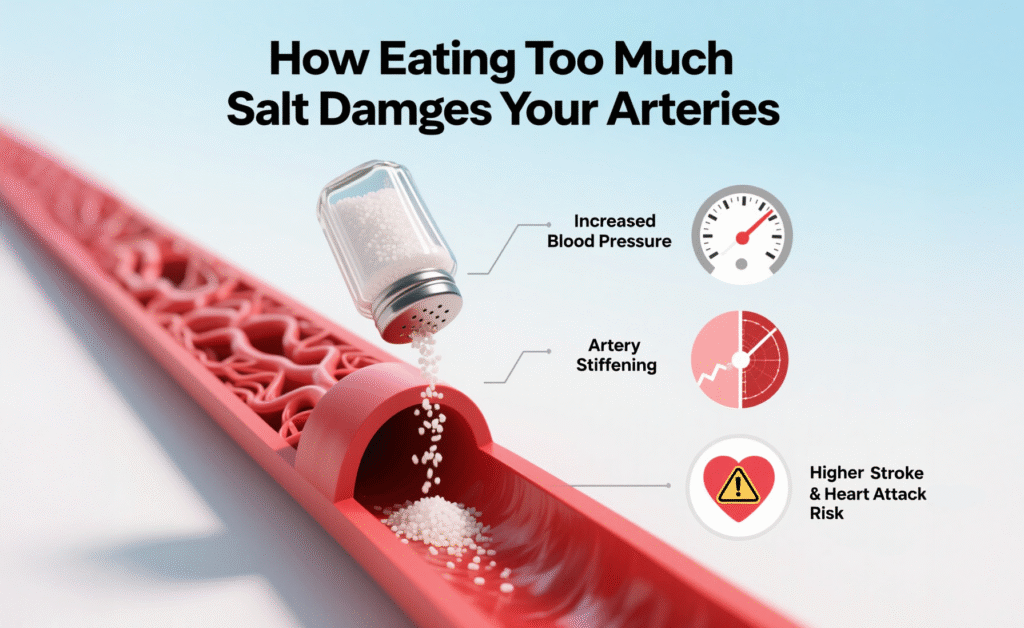
- The Vascular Impact: While sodium is vital for regulating fluids and muscles, excess salt causes water retention, blood vessel inflammation, and endothelial dysfunction.
- The Silent Threat: This combination forces your heart to work harder, stiffens arterial walls, and silently increases your risk of hypertension, strokes, and heart attacks over time.
- Hidden Dangers: Most dietary salt is hidden where you least expect it, packaged foods, restaurant meals, and even items marketed as “healthy”.
- Clinical Action Plan: You can actively protect your arteries by switching to fresh foods, using natural flavour alternatives, staying active, and seeking clinical diagnostics if warning signs appear.
Salt is something we all use without thinking. It’s sprinkled over fries, stirred into soups, and baked into snacks. But what happens when salt quietly sneaks into every meal you eat? The truth is, consuming too much salt can silently harm your arteries, setting the stage for high blood pressure, strokes, heart attacks, and long-term cardiovascular disease. In this article, we’ll dive deep into the science of how salt affects your arteries, why moderation matters, and how you can take control before it’s too late.
Understanding the Role of Salt in the Body
Salt is not the villain it’s often made out to be. In fact, sodium, the key mineral in salt, is vital for your health. The problem begins when you tip the balance from “just enough” to “too much.”
Sodium’s Essential Functions
Sodium helps maintain fluid balance in your body, regulate nerve impulses, and support muscle function. Imagine it as the traffic controller in your bloodstream, ensuring everything moves smoothly. Without sodium, your heart, nerves, and muscles wouldn’t function properly.
The Balance Between Sodium and Potassium
Potassium acts like sodium’s partner, helping relax blood vessels and excrete extra sodium through urine. But when sodium levels spike and potassium is lacking, the delicate balance tips, raising blood pressure and stressing arteries. That’s where the real trouble begins.
Vascular Balance Matrix
| Mineral Element | Primary Function in the Body | Impact on Vascular System |
|---|---|---|
| Sodium | Maintains fluid balance, regulates nerve impulses, and supports muscle function. | Acts as a traffic controller; draws fluid into the bloodstream when present in excess. |
| Potassium | Acts as sodium’s natural partner and physiological counterweight. | Helps relax blood vessels and prompts the kidneys to excrete extra sodium. |
Why Excess Salt Becomes Dangerous
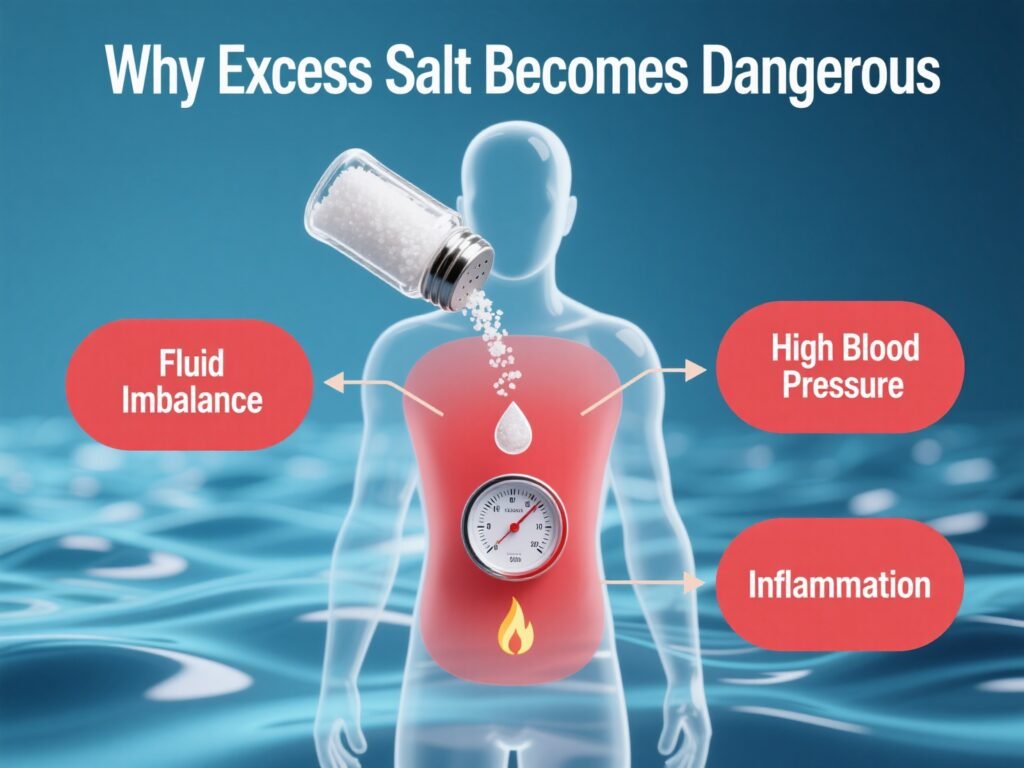
Eating too much salt isn’t just about adding extra flavour, it rewires how your body manages fluids, blood pressure, and inflammation.
Fluid Retention and Its Impact on Blood Pressure
High sodium makes your body hold onto water like a sponge. This extra fluid increases the volume of blood in circulation, raising pressure on arterial walls. Think of it like overfilling a water balloon; eventually, the walls start to stretch and weaken.
The Hidden Link Between Salt and Inflammation
Salt doesn’t just affect water balance. Excess sodium triggers inflammatory responses in blood vessels, irritating the endothelium, the thin layer lining your arteries. This irritation makes arteries more vulnerable to long-term damage.
How High Sodium Intake Affects Arteries
The impact of salt on arteries isn’t immediate; it’s a slow, almost invisible process. Over time, the damage becomes undeniable.
Endothelial Dysfunction Explained
The endothelium helps regulate blood pressure by releasing chemicals that relax or tighten arteries. Excessive sodium disrupts this system, leading to “endothelial dysfunction,” where arteries can no longer properly expand, a key early step in cardiovascular disease.
Stiffening of Arterial Walls
Arteries are designed to be flexible, allowing them to expand and contract with each heartbeat. But with too much sodium, they stiffen, losing elasticity. This forces the heart to work harder, pushing blood through rigid pathways.
The Slow Process of Arterial Damage
The worst part? This damage doesn’t happen overnight. It accumulates silently, with no warning signs until years later, when a major event like a stroke or heart attack strikes.
Pathological Timeline of Vascular Damage
- Stage 1: Fluid Overload (Fluid Retention & Volumetric Stress)
High sodium retention forces the body to hold onto water, increasing blood volume and raising physical pressure against arterial walls. - Stage 2: Tissue Irritation (Endothelial Dysfunction & Inflammation)
Excess sodium irritates the endothelium, triggering systemic inflammatory responses. The arterial lining loses its ability to properly relax and expand. - Stage 3: Vascular Degradation (Stiffening & Silent Accumulation)
Arteries lose their natural elasticity and stiffen. This silent damage accumulates relentlessly over years without explicit warning signs.
Schedule an appointment with our specialists today if you have concerns regarding your cardiovascular health.
Long-Term Health Consequences of Excess Salt
Too much salt creates a domino effect, where one problem leads to another.
- Hypertension and Cardiovascular Disease: The most immediate outcome of high sodium is hypertension (high blood pressure). This condition alone dramatically raises your risk of coronary artery disease and congestive heart failure.
- Risk of Stroke and Heart Attack: Rigid, inflamed arteries combined with high blood pressure are a perfect recipe for strokes and heart attacks. Blood clots can easily form in damaged arteries, cutting off circulation to vital organs.
- Kidney Damage as a Secondary Effect: Excess salt doesn’t just hurt the heart, it also overwhelms the kidneys, which work overtime to flush out sodium. Over years, this stress can lead to chronic kidney disease, which further fuels cardiovascular problems.
Everyday Sources of Excessive Salt
Most people don’t realise that the majority of their salt intake doesn’t come from the salt shaker , it’s hidden in everyday foods.
- Processed Foods and Packaged Snacks: Chips, instant noodles, canned soups, and frozen meals are notorious for packing in sodium to enhance flavour and extend shelf life. Even a single serving can exceed your daily recommended intake.
- Restaurant Meals and Fast Food: Dining out is another hidden trap. Restaurants often use salt generously because it enhances taste and keeps customers coming back. Fast food burgers, fries, and pizzas can contain more sodium than your body needs in an entire day.
- Hidden Salt in “Healthy” Foods: Even foods marketed as “healthy,” such as whole wheat bread, cottage cheese, and salad dressings, can contain surprising amounts of sodium. Without reading nutrition labels, you might be overloading without realising it.
How to Recognise If You’re Eating Too Much Salt
The body does give signals, though they can be subtle at first.
Physical Symptoms to Watch For
Some common signs include constant thirst, frequent urination, swelling in hands or ankles, headaches, and unexplained fatigue. If you’re experiencing these, your salt intake might be too high.
Medical Tests That Reveal Salt’s Impact
Doctors can measure blood pressure, kidney function, and cholesterol levels to assess how salt is affecting your cardiovascular health. A blood sodium test can also reveal imbalances. Regular check-ups at trusted facilities like Northern Heart Hospital Penang can catch these problems early.
Strategies to Protect Your Arteries
The good news? You can protect your arteries by making conscious choices every day.
Action Plan for Cardiovascular Protection
- Reducing Processed Foods
Start by cutting back on packaged snacks and instant meals. Preparing fresh, homemade food helps you control exactly how much salt you’re consuming. - Cooking with Alternatives to Salt
Use herbs, spices, garlic, lemon juice, or vinegar to flavour your meals instead of relying on salt. These alternatives not only reduce sodium intake but also add antioxidants that benefit heart health. - The Role of Hydration and Exercise
Drinking enough water helps your body flush out excess sodium, while regular exercise keeps arteries flexible and lowers blood pressure naturally. Even a 30-minute daily walk can make a huge difference.
When to Seek Medical Advice
Sometimes lifestyle changes aren’t enough, and medical intervention becomes necessary.
Warning Signs You Shouldn’t Ignore
If you experience persistently high blood pressure, frequent headaches, chest pain, or sudden swelling in your limbs, it’s time to consult a doctor immediately.
Clinical Expertise & Diagnosis at Northern Heart Hospital Penang
At Northern Heart Hospital Penang, specialists offer advanced diagnostic tools and personalised treatment plans for patients struggling with high blood pressure or salt-related arterial damage. Their expertise ensures early intervention and prevention of long-term complications.
Final Thoughts
Salt is essential, but too much of it silently corrodes your arteries, setting you up for hypertension, strokes, and heart disease. The damage may be slow, but it’s relentless. By making mindful food choices, staying active, and seeking medical support when necessary, you can protect your arteries and maintain long-term heart health. Remember, your body is resilient, but only if you give it the care it deserves.
Frequently Asked Questions
Most health organisations recommend less than 2,300 mg of sodium per day, which equals about one teaspoon of salt.
Water helps flush out sodium, but it can’t fully undo the effects of consistently eating too much salt.
Despite marketing claims, these salts still contain sodium and can harm your arteries when consumed in excess.
Studies show that lowering sodium intake can improve blood pressure and arterial health within weeks, though long-term benefits require consistent effort.
No. Some people are more “salt-sensitive” than others, meaning their blood pressure spikes more noticeably with high sodium intake.
About Northern Heart Hospital Penang
Founded in 2018, it is the first and only purpose-built cardiac and vascular specialist hospital in Penang and northern Malaysia, led by highly reputable and experienced clinicians, providing comprehensive heart and vascular care under one roof in the heart of George Town.
- Clinical Expertise: Tailored post-operative nutrition and rehabilitation plans.
- Comprehensive Care: Access to leading cardiac and vascular specialists under one roof.
Schedule an appointment with our specialists today if you have concerns regarding your cardiovascular health.
Disclaimer: This content is for educational and informational purposes only and does not substitute for professional medical advice, diagnosis, or treatment. Always consult a qualified healthcare provider regarding a medical condition.