
How Stress Secretly Damages Your Heart and How to Stop It
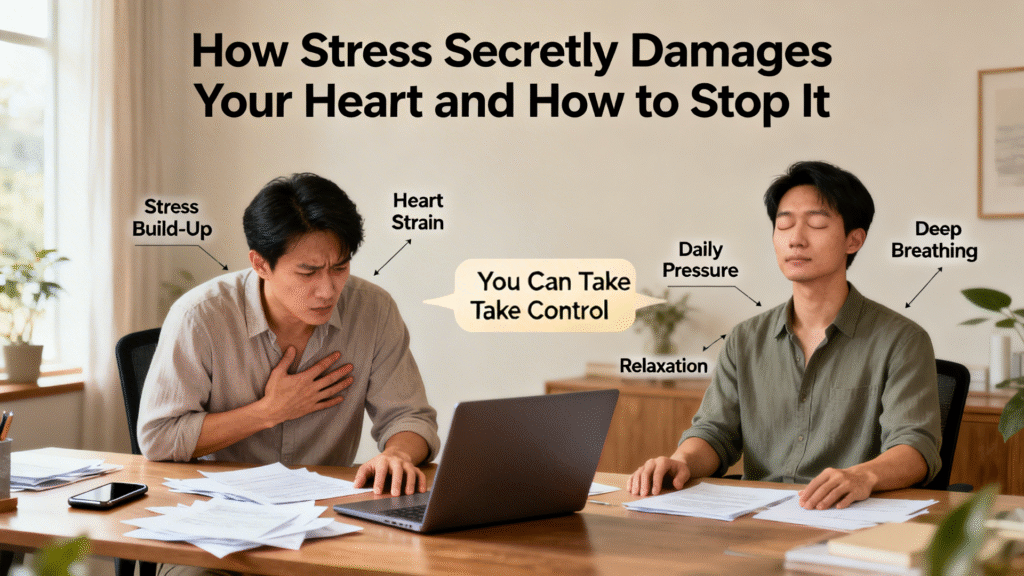
Understanding the Hidden Link Between Stress and Heart Health
Stress is sneaky. You can’t see it the way you see a broken bone or a cut, but it quietly chips away at your heart health day by day. Many people assume stress only affects their mood or sleep, but in reality, it has a direct and damaging effect on the cardiovascular system.
Think of stress like a constant alarm bell ringing in the background. At first, it’s manageable, but when it never shuts off, it strains your heart, blood vessels, and overall health. This is why doctors consider stress a silent contributor to heart disease — it doesn’t scream for attention until it’s already causing serious issues.
What Happens Inside Your Body When You’re Stressed?
Ever noticed your heart racing before a big presentation or argument? That’s not coincidence — that’s your body in “fight or flight” mode. Stress triggers your nervous system, which floods your bloodstream with stress hormones.
In the short term, this response is helpful. It keeps you alert and ready to react. But in the long term, when stress becomes chronic, it wreaks havoc — raising blood pressure, narrowing arteries, and making your heart work harder than it should.
The Science of Stress Hormones
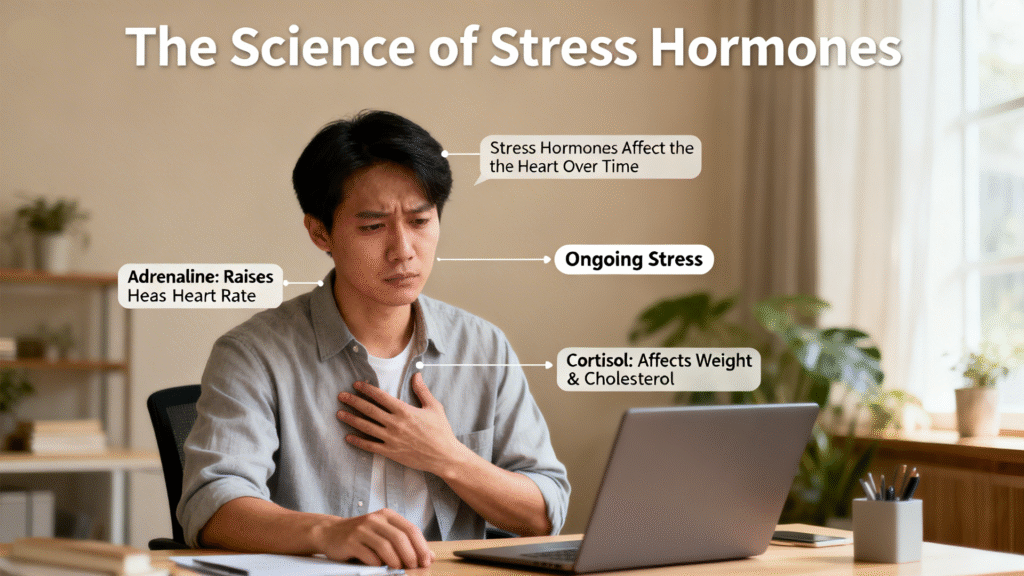
Hormones are at the center of how stress damages your heart. Two in particular play starring roles.
Cortisol: The Silent Saboteur
Cortisol is your body’s built-in alarm system. In moderation, it helps regulate blood sugar, metabolism, and immune response. But chronically high cortisol levels cause:
- Increased blood sugar
- Weight gain, especially around the belly
- Higher cholesterol
- Hardening of the arteries
Over time, this translates into an increased risk of heart disease.
Adrenaline: The Short-Term Burst with Long-Term Risks
Adrenaline spikes your heart rate and blood pressure instantly. It’s great if you need to run from danger, but not if it happens daily at your desk. Prolonged adrenaline surges strain your heart muscle, making it more vulnerable to irregular rhythms or even heart attacks.
Why Stress Hits the Heart Harder Than Other Organs
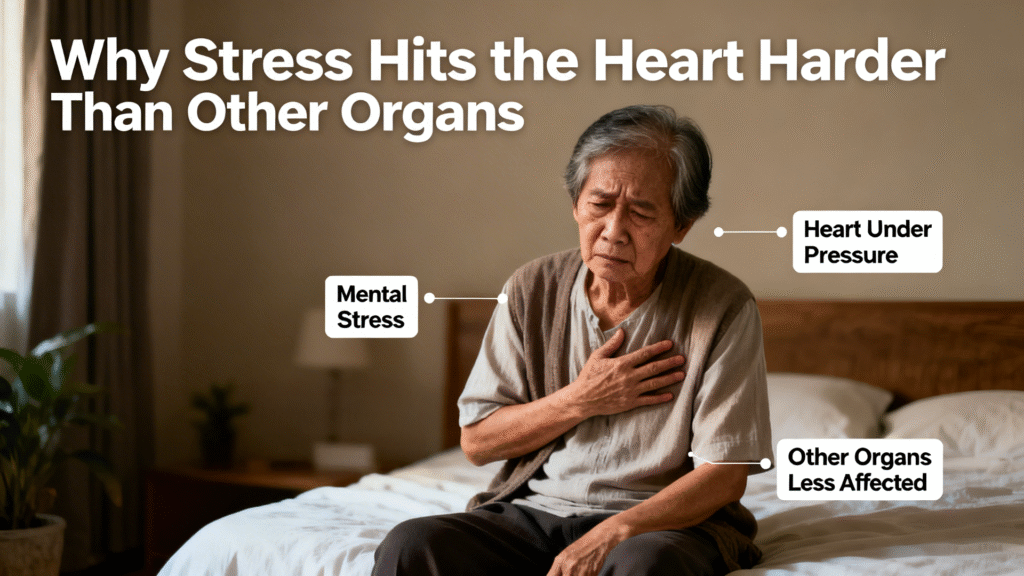
Stress doesn’t just target your emotions; it has a special way of attacking your heart. Here’s why:
- The heart and circulatory system respond immediately to stress hormones.
- Stress increases inflammation, a key driver of artery damage.
- Stress often leads to unhealthy coping habits like overeating or smoking, which multiply the risk.
That’s why cardiologists pay so much attention to stress when evaluating patients with high blood pressure, chest pain, or other cardiovascular issues.
The Physical Signs Stress Is Hurting Your Heart
Your body often warns you — you just need to know what to look for.
Chest Pain and Palpitations
That sudden pounding or tightening in your chest during stressful moments is no accident. Stress makes your heart beat harder and faster, sometimes to the point of irregular rhythm.
High Blood Pressure
Stress hormones constrict your blood vessels. This narrows the pathways, forcing your heart to pump harder and raising your blood pressure. Over time, this damages artery walls.
Sleep Disturbances
Poor sleep caused by stress doesn’t just make you tired — it doubles the risk of heart disease. Lack of rest raises blood pressure and weakens your heart’s ability to repair itself.
Chronic Stress vs. Acute Stress: What’s the Difference?
- Acute stress is short-term. Think of the anxiety before an exam. It spikes your heart rate but usually goes away after the event.
- Chronic stress is long-term. It’s the daily grind of financial problems, caregiving, or toxic work environments. Chronic stress is the true danger, slowly wearing down your cardiovascular system over years.
Stress-Related Habits That Make Things Worse
When stressed, people often turn to habits that feel comforting but hurt the heart in the long run.
Overeating and Poor Nutrition
Stress-eating often involves junk food, which is high in sugar and unhealthy fats. This clogs arteries and leads to weight gain, putting extra pressure on your heart.
Smoking and Drinking
Nicotine and alcohol provide a quick “escape,” but both damage your cardiovascular system. Smoking narrows arteries, while excessive drinking raises blood pressure.
Sedentary Lifestyle
When stressed, people often skip exercise. Sitting too long allows blood pressure to rise and circulation to slow, creating the perfect environment for heart strain.
Real-Life Example: How Stress Contributed to a Heart Attack
Consider this: A 58-year-old executive, working 70-hour weeks, ignored constant chest tightness as “stress from work.” One day, while rushing to a meeting, he collapsed. Tests later showed blocked arteries made worse by years of chronic stress, poor sleep, and high blood pressure.
This case isn’t unique. Cardiologists at Northern Heart Hospital often see patients whose stress directly contributed to life-threatening cardiac events.
How Doctors Identify Stress-Induced Heart Conditions
Doctors may use:
- Electrocardiograms (ECG) to check irregular heart rhythms
- Stress tests to monitor the heart during physical exertion
- Blood tests to measure stress hormone levels
- Imaging tests to check artery blockages
Identifying stress as a trigger is crucial because treating only the physical heart problem without addressing the mental side leaves the risk wide open.
Stress Management as Preventive Cardiology
Here’s the good news: stress management is just as important as medication in preventing heart disease. Modern cardiology recognizes that reducing stress can lower blood pressure, improve heart function, and even prevent heart attacks.
Techniques to Control Stress Before It Controls You
Breathing and Meditation Exercises
Deep breathing or mindfulness meditation lowers cortisol, calms the nervous system, and helps reset your body’s stress response.
Exercise as a Natural Stress Reliever
Walking, yoga, or swimming releases endorphins — your body’s natural “feel-good” chemicals — which counteract stress hormones.
Social Support and Talking It Out
Talking with friends, family, or a counselor lightens the emotional load. Social interaction actually lowers stress hormone levels.
Nutrition and Stress: Eating Your Way to a Calmer Heart
Certain foods protect your heart during stressful times:
- Fatty fish (omega-3s reduce inflammation)
- Dark chocolate (moderation is key!)
- Nuts, seeds, and oats (help stabilize blood pressure)
- Leafy greens (improve blood flow)
Meanwhile, reduce caffeine, sugary snacks, and processed foods, which only add fuel to the stress fire.
When to Seek Professional Help
If stress is causing chest pain, dizziness, constant fatigue, or palpitations, don’t wait. Seek medical attention immediately. Facilities like Northern Heart Hospital provide specialized care in both heart treatment and stress-related cardiac conditions.
How Northern Heart Hospital Supports Stress-Related Heart Care
At Northern Heart Hospital, cardiologists don’t just treat the symptoms — they treat the person. Their approach includes:
- Comprehensive cardiac exams
- Stress management counseling
- Personalized lifestyle and diet plans
- Rehabilitation programs for those recovering from stress-related cardiac events
This holistic approach helps patients regain both their physical health and peace of mind.
Conclusion: Taking Control of Stress, Saving Your Heart
Stress is unavoidable — but heart damage from stress doesn’t have to be. By understanding how stress silently harms your cardiovascular system and taking steps to manage it, you protect your most vital organ.
Whether it’s deep breathing, better nutrition, or seeking expert care at Northern Heart Hospital, every step counts. Remember, you don’t have to let stress run the show — you can take back control.
FAQs
1. Can stress really cause a heart attack?
Yes, prolonged stress raises blood pressure and damages arteries, which can directly lead to heart attacks.
2. How can I tell if stress is affecting my heart?
Watch for chest tightness, palpitations, fatigue, or high blood pressure. Always get these checked by a doctor.
3. Is exercise always safe for stressed hearts?
Yes, when done moderately. Always consult a doctor if you have heart disease before starting new routines.
4. Can diet reduce stress and protect the heart?
Absolutely. Omega-3s, whole grains, and greens reduce inflammation and regulate blood pressure.
5. What is the best medical support for stress-related heart problems?
Cardiology centers like Northern Heart Hospital provide tailored care for patients whose heart issues are linked to stress.