
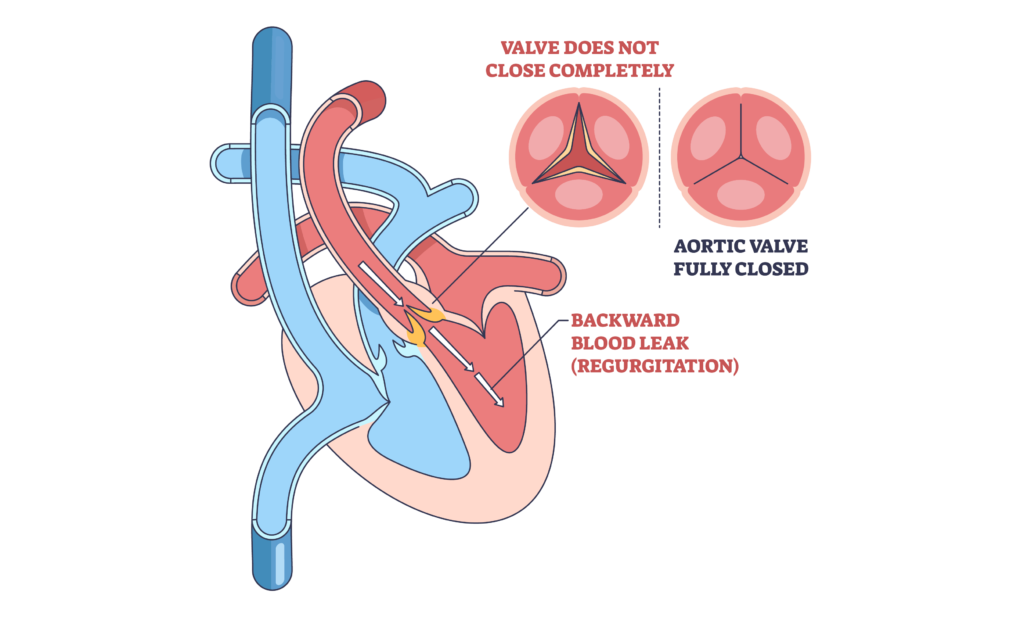
Your heart works continuously to pump blood throughout your body, and its valves play a vital role in ensuring blood flows in the correct direction. When one of these valves does not close properly, blood can leak backwards. This condition is known as a leaky heart valve, or valve regurgitation.
At Northern Heart Hospital Penang, early detection and expert care are central to managing heart valve conditions effectively. With a dedicated Heart Valve Clinic, advanced diagnostic technology and a multidisciplinary team, patients receive comprehensive, personalised care at every stage of their journey.
Understanding the heart valves
The heart has four valves: the mitral, tricuspid, aortic and pulmonary valves. These valves open and close with every heartbeat, directing blood through the heart’s chambers and out to the rest of the body.
A healthy valve closes tightly after blood passes through it. When a valve becomes weakened or damaged, it may not close fully. This allows blood to flow backwards, forcing the heart to work harder to maintain proper circulation.
Over time, this added strain can lead to enlargement of the heart and reduced pumping efficiency.
What is a leaky heart valve?
A leaky heart valve occurs when one or more of the heart valves fail to close completely. This results in regurgitation, where blood flows in the opposite direction of normal circulation.
| INFO BOX: When should you seek medical attention?Seek medical evaluation if you experience:Sudden or worsening breathlessness Persistent fatigue affecting daily activities Swelling in the legs or abdomen Rapid or irregular heartbeat Early assessment at Northern Heart Hospital Penang can help detect valve problems before complications arise. |
The severity of the condition can vary. Some individuals may have mild leakage without noticeable symptoms, while others develop significant regurgitation that affects heart function and overall health.
The mitral and aortic valves are most commonly affected, although any valve can be involved.
Why does it matter?
In mild cases, a leaky valve may not cause immediate problems. However, as the condition progresses, the heart must compensate for inefficient blood flow. Over time, this can lead to:
- Enlargement of the heart
- Reduced pumping efficiency
- Irregular heart rhythms
- Fluid accumulation in the lungs or body
- Heart failure in severe cases
This highlights the importance of early detection and timely management.
Common symptoms to watch for
Symptoms often develop gradually and may not be noticeable in the early stages. As the condition progresses, patients may experience:
- Shortness of breath, especially during activity or when lying down
- Fatigue or reduced exercise tolerance
- Palpitations or irregular heartbeat
- Swelling in the ankles, feet or abdomen
- Chest discomfort
- Lightheadedness or fainting in more advanced cases
Because these symptoms can overlap with other heart conditions, proper evaluation at Northern Heart Hospital Penang is essential for an accurate diagnosis.
Causes of a leaky heart valve
A leaky heart valve can develop due to a range of underlying conditions.
- Age-related degeneration: With age, heart valves may become stiff, thickened or weakened, leading to leakage.
- Mitral valve prolapse: The valve flaps bulge backwards, preventing proper closure.
- Heart infections: Conditions such as infective endocarditis can damage the valves.
- Rheumatic heart disease: A complication of untreated infections that can cause lasting valve damage.
- Heart attack or cardiomyopathy: Damage to the heart muscle can affect valve function.
- Congenital heart defects: Some individuals are born with abnormal valve structures.
- High blood pressure: Long-term hypertension can place strain on the heart and its valves.
Types of valve regurgitation
- Mitral regurgitation
The most common form, where blood leaks back into the left atrium.
- Aortic regurgitation
Blood flows back into the left ventricle, often causing gradual enlargement of the heart.
- Tricuspid regurgitation
Typically associated with enlargement of the right side of the heart.
- Pulmonary regurgitation
Less common and often linked to congenital conditions.
How is it diagnosed?
At Northern Heart Hospital Penang, diagnosis begins with a thorough clinical assessment, followed by advanced investigations.
Comprehensive diagnostic services include:
- Echocardiogram
The primary tool used to evaluate valve structure and function. - Advanced cardiac imaging
Provides detailed assessment of valve severity and heart performance.
- INFO BOX: The role of cardiac imagingAt Northern Heart Hospital Penang, cardiac imaging helps to:
- Detect early valve abnormalities
- Accurately assess severity
- Guide treatment decisions
- Monitor disease progression over time
Identifies abnormal heart rhythms.
- Chest X-ray
Detects heart enlargement or fluid buildup.
- Cardiac MRI and CT scans
Used for more complex or detailed evaluation.
These services are integrated within the Heart Valve Clinic, ensuring efficient and coordinated care.
Treatment options for a leaky heart valve
Treatment depends on the severity of the condition, symptoms and overall heart health.
- Monitoring and preventive care
Mild cases may only require regular follow-up at the Heart Valve Clinic. Patients are guided on lifestyle measures and ongoing monitoring.
- Medications
Medications help manage symptoms and reduce strain on the heart. These may include diuretics, blood pressure medications and heart rhythm control drugs.
- Minimally-invasive procedures
Northern Heart Hospital Penang offers minimally-invasive interventions for suitable patients. These approaches involve smaller incisions and shorter recovery times compared to traditional surgery.
- Surgical treatment
For more severe cases, surgical repair or replacement may be required. Both minimally-invasive surgery and open-heart surgery are available, depending on the patient’s condition.
The Heart Valve Clinic at Northern Heart Hospital Penang
Northern Heart Hospital Penang provides a dedicated Heart Valve Clinic designed to deliver seamless, patient-centred care.
Key features of the clinic:
- Comprehensive evaluation in a single location
- Coordinated care across multiple specialists
- Personalised treatment plans
- Access to advanced diagnostic and surgical technologies
- Structured long-term follow-up programmes
This integrated approach ensures patients receive timely and effective care throughout their treatment journey.
Multidisciplinary expertise you can trust
Heart valve disease often requires input from multiple specialists. At Northern Heart Hospital Penang, patients benefit from a collaborative team approach.
Specialist in cardiac imaging, ensuring precise diagnosis and guiding treatment planning.
Expert in minimally-invasive cardiac surgery, focusing on advanced techniques that promote faster recovery and reduced surgical trauma.
Specialist in cardiothoracic and open-heart surgery, managing complex cases requiring surgical intervention.
This multidisciplinary collaboration allows each patient to receive care tailored to their specific condition.
Advanced procedures and services at Northern Heart Hospital Penang
Northern Heart Hospital Penang offers a full spectrum of treatment options for heart valve disease.
- Valve repair
Whenever possible, preserving the patient’s natural valve is prioritised, as this often provides better long-term outcomes.
- Valve replacement
When repair is not feasible, replacement with biological or mechanical valves is considered based on individual needs.
- Minimally-invasive cardiac surgery
These procedures involve smaller incisions, resulting in less pain, shorter hospital stays and faster recovery.
- Open-heart surgery
For complex or advanced cases, open-heart surgery provides a safe and effective treatment option, supported by experienced cardiothoracic surgeons.
| INFO BOX: Benefits of early treatmentEarly treatment can:Prevent progression to heart failureReduce the risk of complicationsImprove quality of lifeEnable access to less invasive treatment options |
Integrated perioperative care
Patients receive comprehensive care from pre-surgical assessment to post-operative recovery and rehabilitation.
- Long-term follow-up
Ongoing monitoring ensures sustained heart health and early detection of any changes.
Living with a leaky heart valve
Many individuals with mild valve leakage can lead active lives with regular monitoring. Staying engaged in your care is essential.
Practical tips:
- Attend regular follow-ups at Northern Heart Hospital Penang
- Take medications as prescribed
- Maintain a balanced diet and active lifestyle
- Monitor for new or worsening symptoms
Patients who undergo procedures at Northern Heart Hospital Penang benefit from structured follow-up care that supports recovery and long-term wellbeing.
Specialist care tailored to you
If you have been diagnosed with a heart murmur, experience unexplained symptoms or have risk factors for heart disease, it is advisable to seek specialist evaluation.
Northern Heart Hospital Penang provides expert assessment, advanced diagnostics and personalised treatment plans, ensuring patients receive high-quality, comprehensive care.
With early detection and appropriate care, a leaky heart valve is a condition that is highly manageable. Northern Heart Hospital Penang offers a dedicated Heart Valve Clinic, advanced diagnostic capabilities and a multidisciplinary team committed to delivering personalised, evidence-based care.